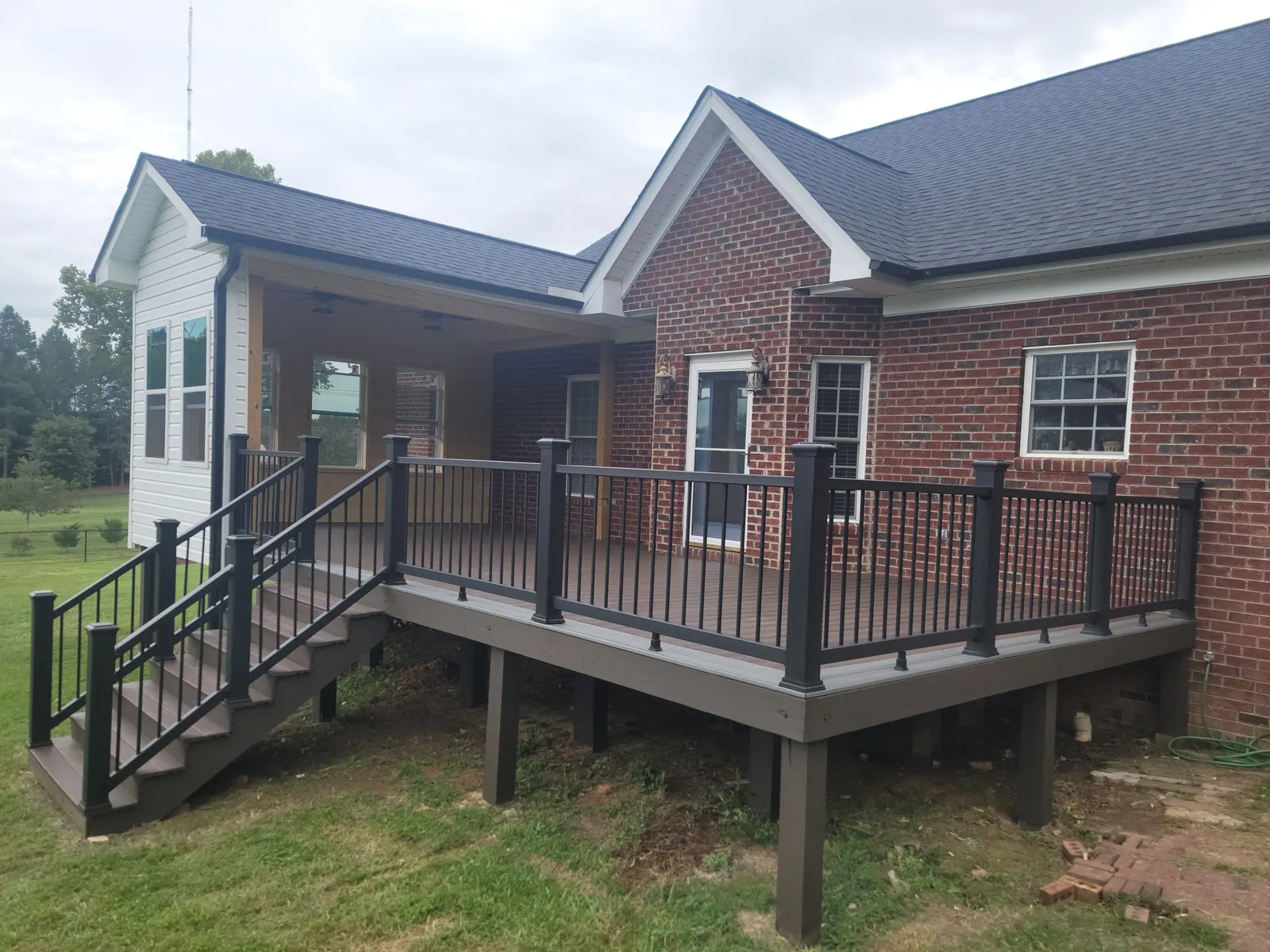
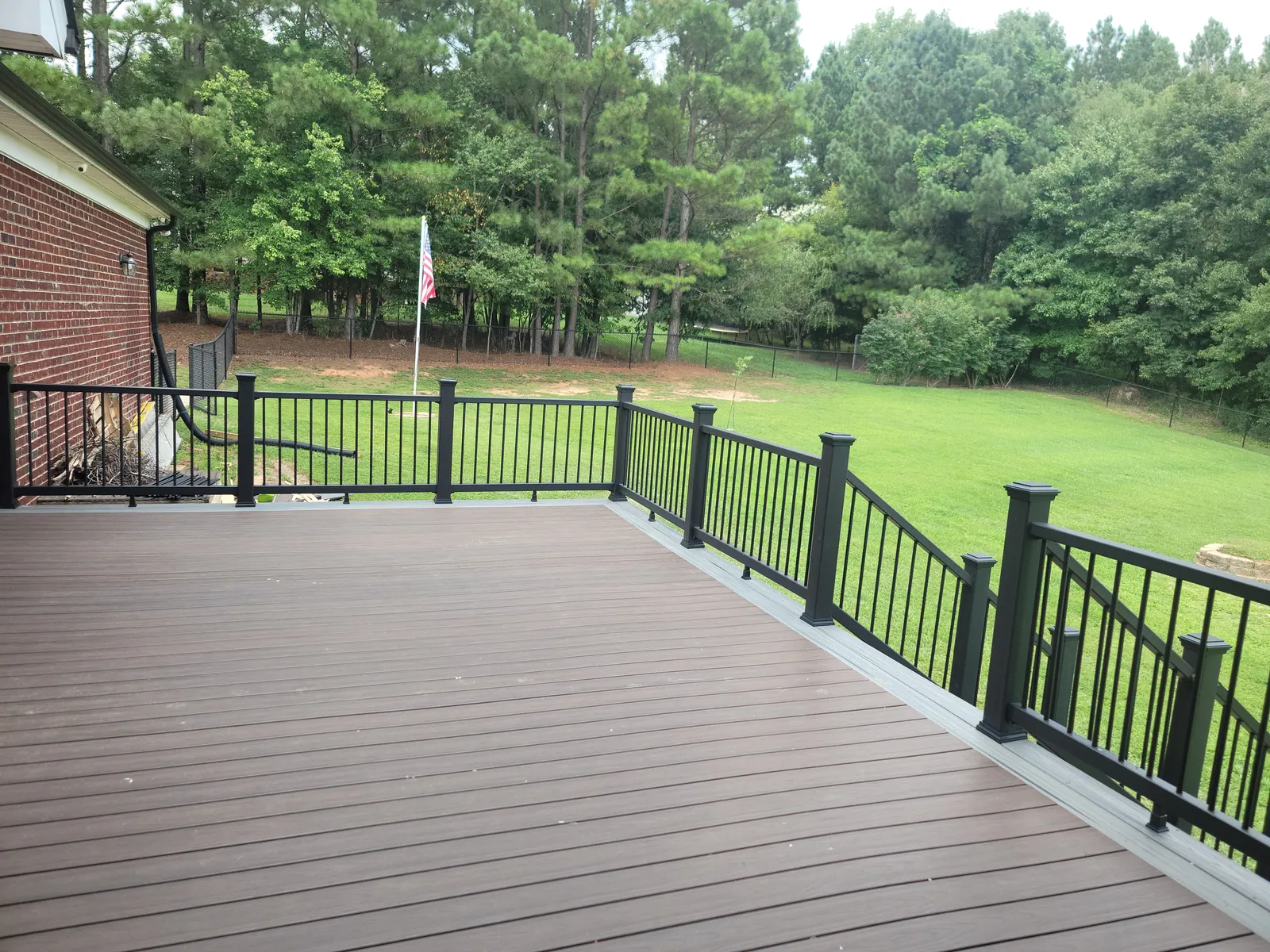
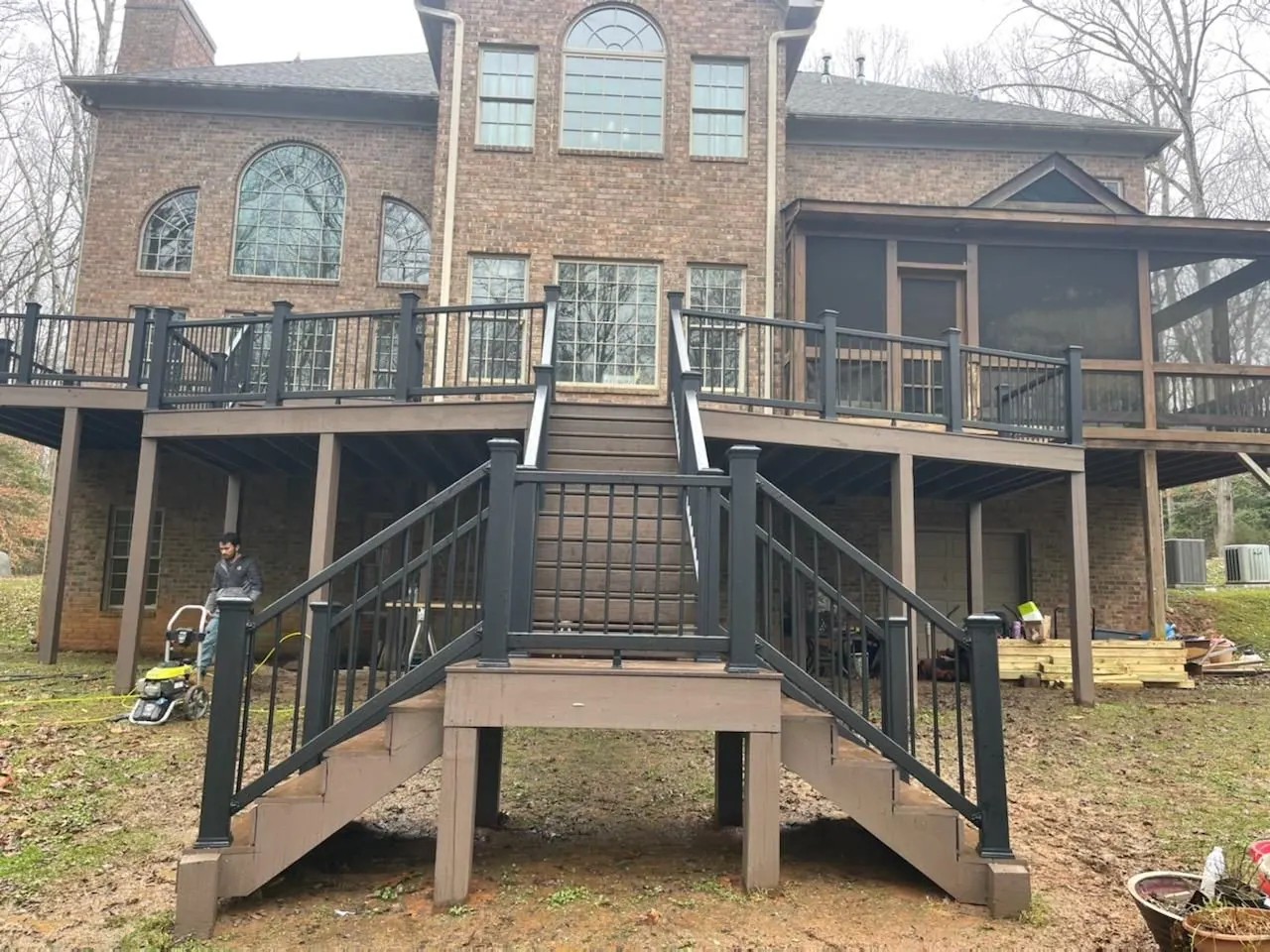
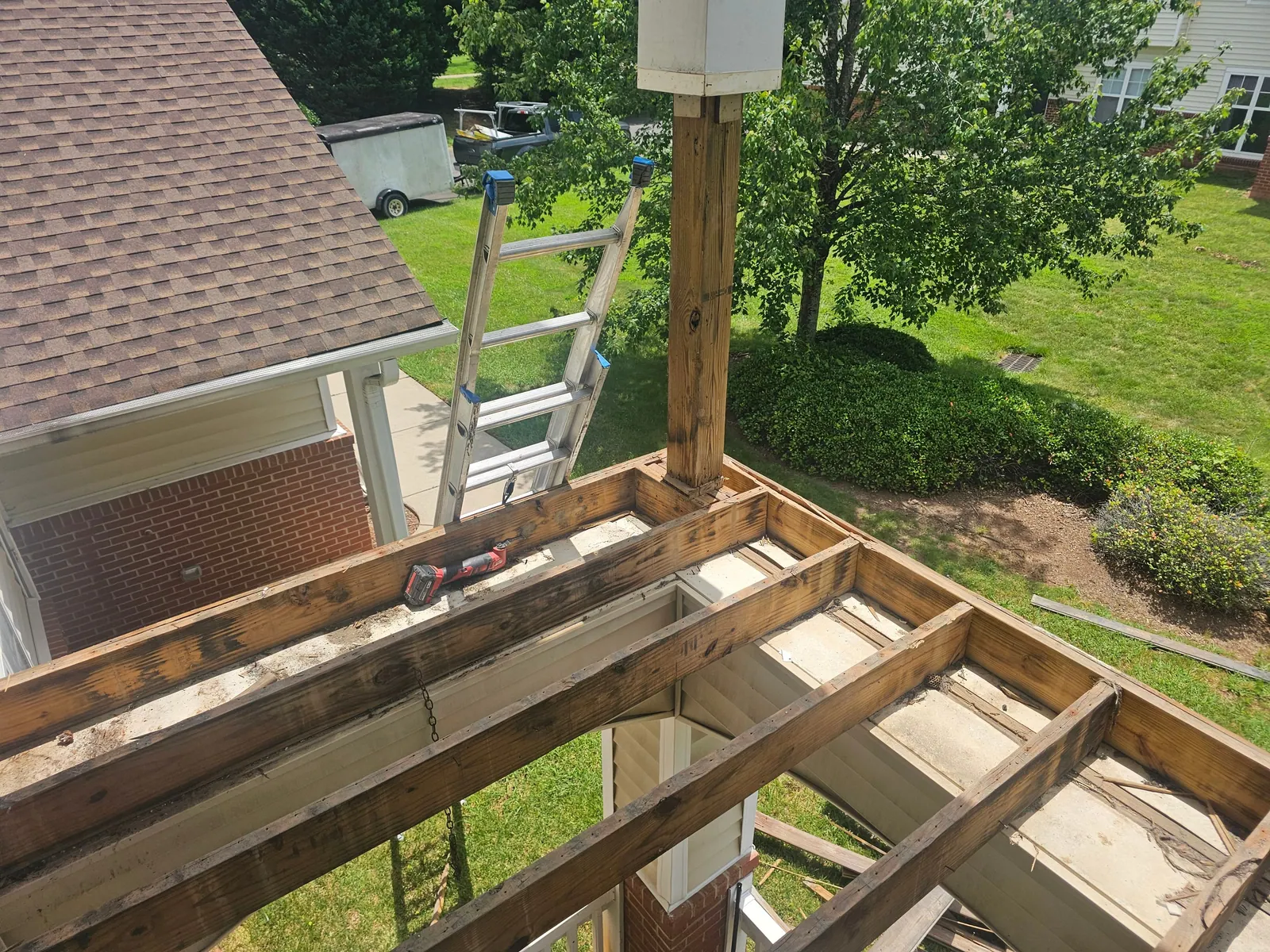
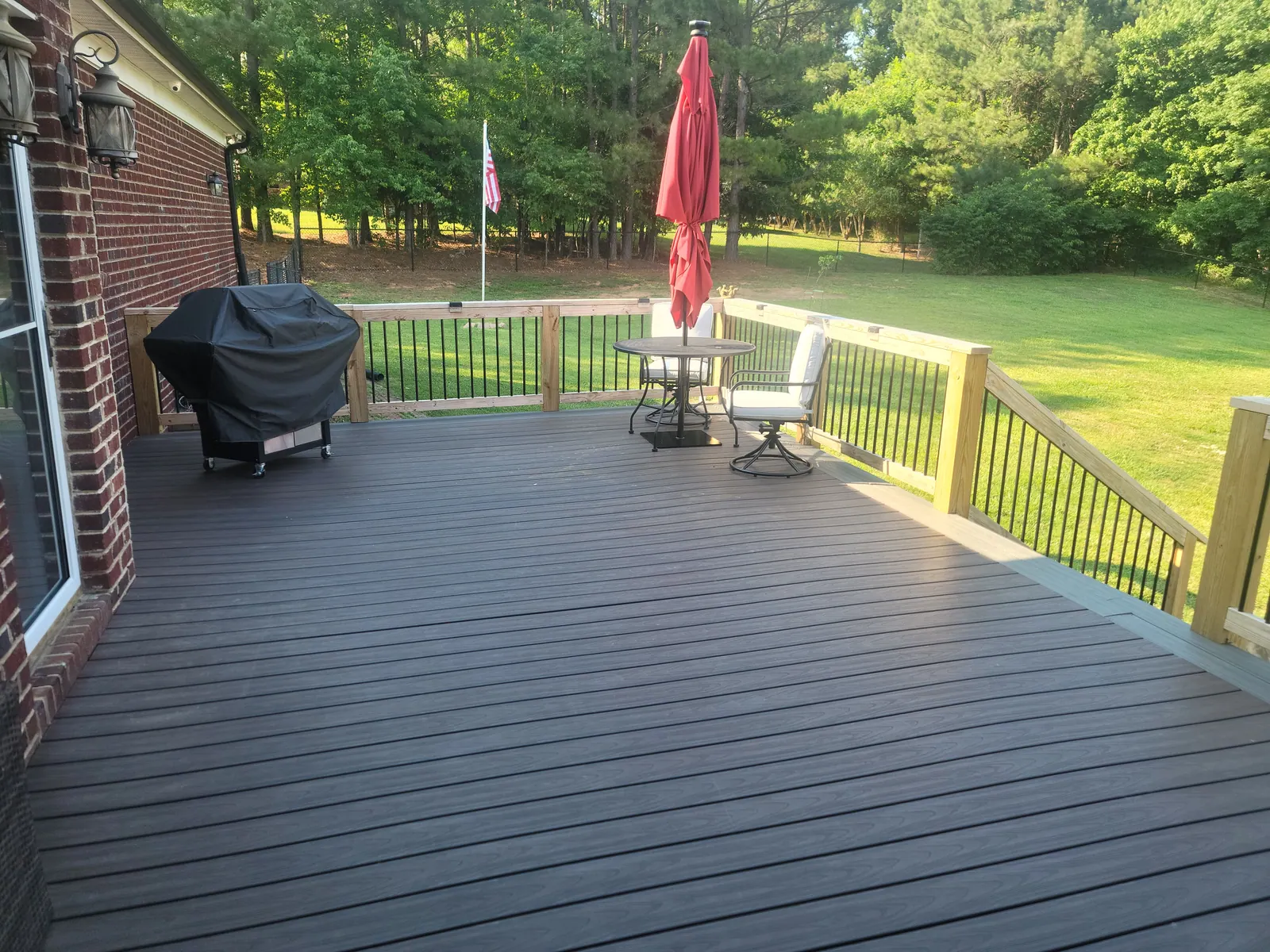
Pressure-treated lumber is what most decks in this region are built with. It's solid, it's available, and it costs less upfront. The tradeoff is maintenance: it needs to be sealed periodically and it will eventually gray and crack if left untreated. Composite decking, including products like Trex, costs more to install but it doesn't rot, it holds its color longer, and it doesn't splinter. For a deck that gets heavy use or sits in full sun, composite is usually the smarter long-term call. For a straightforward build where budget is the main constraint, pressure-treated is perfectly fine when it's installed right. Honestly, the material matters less than the framing underneath it. A composite deck on bad joists is still a bad deck. We don't cut corners on the structure regardless of what goes on top. For homes where the deck is part of a larger
exterior renovation, we'll talk through how the materials coordinate with siding, trim, and paint.